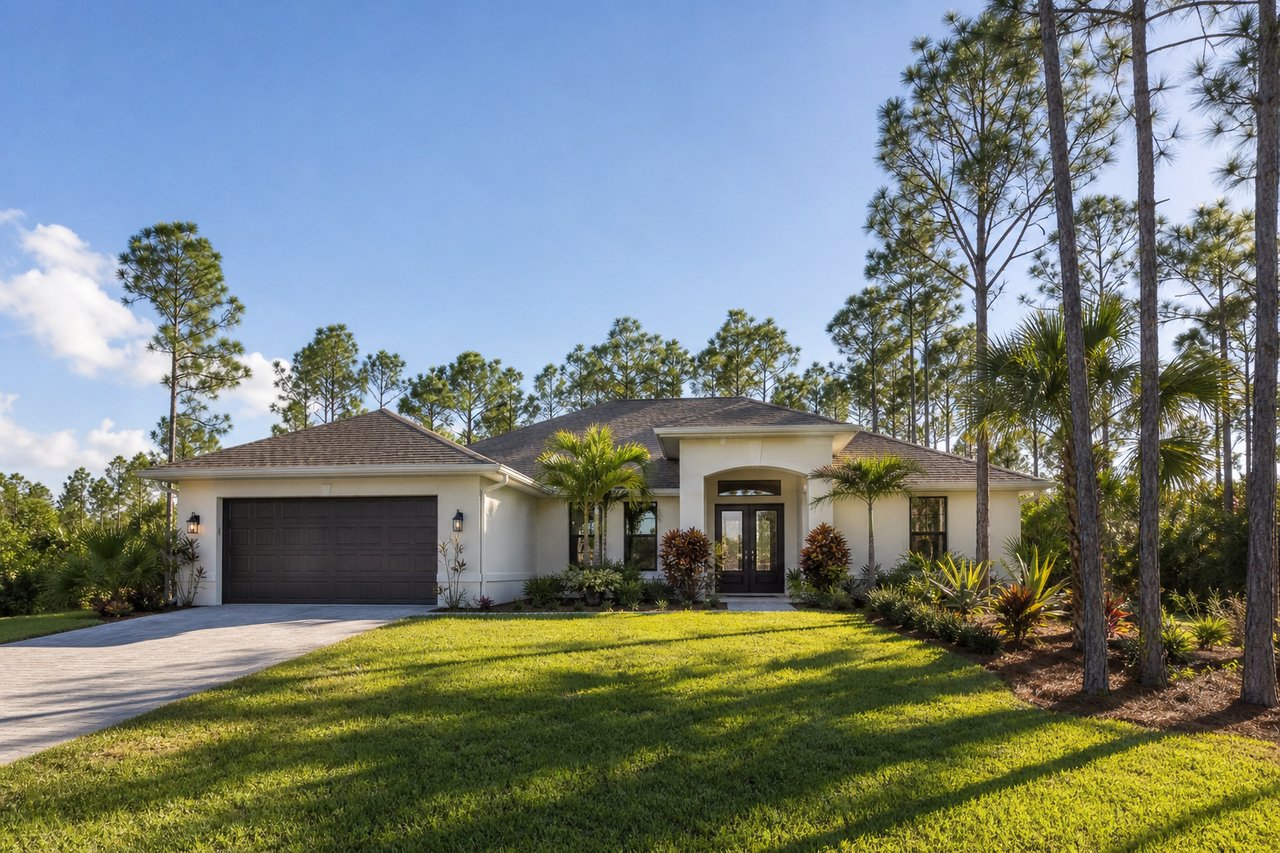
Imagine you are three weeks into a thirty-day closing on a coach home in Fiddler's Creek when the title company sends an email that stops everything. The estoppel certificate has come back, but it turns out the file needed three of them, not one. There's the master association that covers the Club and Spa, the community gates, and security. There's the sub-association for the specific village the unit sits in. And because the property falls inside Fiddler's Creek Community Development District #1, there's a third document to request from a special-purpose unit of local government that most out-of-state buyers have never encountered before.
Nobody made a mistake. This is simply how closing works across a meaningful share of Naples's gated and golf communities, and it is the detail that catches more buyers off guard than almost anything an inspector finds.
One Estoppel Is the Exception, Not the Rule
Ask most people what an estoppel certificate is and, if they know at all, they'll describe a single document: proof from the homeowners association that the seller's dues are paid current before the sale closes. In much of the country, that description holds.
In Naples, it frequently doesn't. Collier County is home to more than 1,500 registered community associations, with a median monthly fee around $538 as of mid-2026, and a meaningful number of those communities stack multiple governing entities on top of a single property. Fiddler's Creek runs on four separate layers: a master homeowners association, a neighborhood-level sub-association, a Community Development District assessment that rides on the Collier County property tax bill, and an optional golf or Tarpon Club membership. Lely Resort takes a different shape but produces the same effect. One Community Development District, established in 1990 to finance and operate the development, sits underneath a master property owners association that coordinates 48 separate HOA and condo associations across the community. Naples Reserve and Pelican Marsh follow variations of the same pattern.
Every layer with authority over money owed is a legal party that can be asked for its own estoppel certificate, and every one of them runs its own clock.
What Each Layer Charges, and Why the Math Doesn't Simplify
Florida law caps what any single association can charge to prepare a certificate: no more than $299 for an account in good standing, up to another $179 if the account is delinquent, and up to $119 more for an expedited request. Those caps are real and predictable per certificate. The complication is that "per certificate" is the operative phrase. A closing that needs a master association certificate and a sub-association certificate isn't paying one $299 fee, it's paying two. Add a CDD or a club entity and it becomes three or four, each arriving as its own invoice with its own timeline.
The dollar difference within a single community can be just as real as the fee stacking. Fiddler's Creek's CDD assessments vary considerably by village, since some neighborhoods are still paying down bonds issued for infrastructure while others are not. Two buyers shopping the same community, even comparable homes, can be looking at very different annual carrying costs depending on which section their unit sits in, and none of that shows up until someone actually orders the estoppel and reads the number on the page.
The Ten Business Day Clock Isn't What It Sounds Like
Florida statute gives an association ten business days from a written or electronic request to deliver the certificate. Ten business days sounds manageable inside a typical thirty-day closing until two things are accounted for. First, it's business days, not calendar days, so a request submitted before a holiday weekend can lose several days before the clock even starts moving. Second, when a file needs certificates from more than one association, those clocks don't run in parallel by default. A title company chasing a master association, a sub-association, and a CDD is coordinating three separate offices with three separate response speeds, and smaller self-managed associations sometimes hand the job to a single volunteer board member fitting it in around a full-time job.
Once issued, a certificate is only good for a limited window: 30 days if delivered electronically, 35 if delivered by mail. If a closing slips past that window for any reason unrelated to the association itself, the certificate expires and has to be reissued, with a new fee and a new ten-day clock attached. A two-week financing delay on a Fiddler's Creek or Lely Resort file doesn't just push the closing date. It can quietly reset every estoppel already sitting in the file.
The 2026 Legislature Tried to Change This, and Couldn't
This friction has been visible enough in Tallahassee that lawmakers keep trying to touch it. During the 2026 session, a bill that would have eliminated or significantly restructured the estoppel fee passed the Florida House by a lopsided 108 to 2 vote in early March. It died anyway, stalling in Senate Rules when the regular session adjourned in mid-March. It wasn't the first attempt. A similar push in 2024 also advanced through committee votes before collapsing when the House and Senate couldn't agree on who should absorb the cost if associations could no longer charge for it.
The practical takeaway for anyone buying or selling in Naples right now: the current fee caps, the ten-business-day deadline, and the layered-certificate reality aren't a temporary arrangement waiting to be fixed. The framework has been in place since 2017, has survived two serious legislative attempts to unwind it, and the next scheduled inflation adjustment to the fee caps isn't until July 1, 2027. Plan a closing timeline around what exists today, not around what might change next session.
"An association waives the right to collect any moneys owed in excess of the amounts specified in the estoppel certificate from any person who in good faith relies upon the estoppel certificate."
That's the actual language written into Florida's condominium and homeowners association statutes, and it matters more than it sounds. Once a certificate is issued, the association is bound by the number on it, even if it later discovers the real balance was higher. That protects a buyer from inheriting a debt nobody disclosed. It does not protect a seller, who remains personally liable for whatever was actually owed, and it does nothing to stop a legitimate special assessment from showing up on the certificate in the first place.
What Actually Shows Up on the Certificate
Naples HOA fees have climbed sharply over the past few years, largely on the back of insurance costs and reserve requirements that boards can no longer defer. Special assessments in the five-figure range, sometimes $20,000 or more per unit, have become common enough in Naples gated communities in 2026 that they're worth asking about before writing an offer, not after signing one. This is exactly the kind of charge an estoppel certificate is built to surface: unpaid or upcoming assessments tied to a specific unit, itemized by date and dollar amount. The certificate doesn't create the cost. It's simply the first moment in the transaction when a buyer sees it in writing.
Before You Write the Offer
A short list worth working through before a Naples contract is signed, especially in a master-planned or gated community:
- How many separate associations or districts have authority over this property? Master, sub-association, CDD, and club membership can each carry a different answer.
- Has each entity levied a special assessment in the past five years, and is one currently pending?
- Which CDD assessment appears on the property tax bill, and is it tied to a bond that phases out on a schedule or one that runs indefinitely?
- What timeline is the closing built around? A file with three association layers needs more runway than a file with one.
- Who is ordering each certificate, and when? The ten-day clock only starts once the written request actually goes out.
None of these questions slow down a clean transaction. They exist to catch the ones that aren't clean before the closing date is already locked in.
Working Through It With Local Eyes
This part of a Naples transaction rarely shows up on a listing sheet and almost never comes up until the file is already moving. Buyers relocating from out of state, especially those who can't be in Naples to track down a management company office or sit in on a board meeting, are the ones most exposed to this kind of delay. Knowing which communities carry two association layers and which carry four, before an offer goes in, is the difference between a closing that runs on schedule and one that stretches by weeks over paperwork nobody flagged early enough.
Leonor Enguita works Naples and Collier County closings from the contract date forward, coordinating estoppel requests, association contacts, and realistic timelines for buyers who can't always be on the ground to chase them down themselves. If you're evaluating a Naples community with more than one HOA layer, book a free relocation consultation before you write the offer, not after.
Frequently Asked Questions
Who pays for the estoppel certificate in a Naples closing? It's negotiable in the purchase contract, but sellers typically cover it, since the certificate confirms their account is paid current before the property transfers.
Can a cash buyer skip the estoppel certificate? No. The certificate protects against association debt attaching to the property after the sale, which has nothing to do with how the purchase is financed. Every sale inside an HOA or condo association needs one.
What happens if a special assessment shows up on the estoppel after the contract is already signed? It becomes a negotiation point between buyer and seller, usually handled the same way an unexpected inspection finding would be, through a credit, a price adjustment, or in some cases a contingency that allows the buyer to walk.