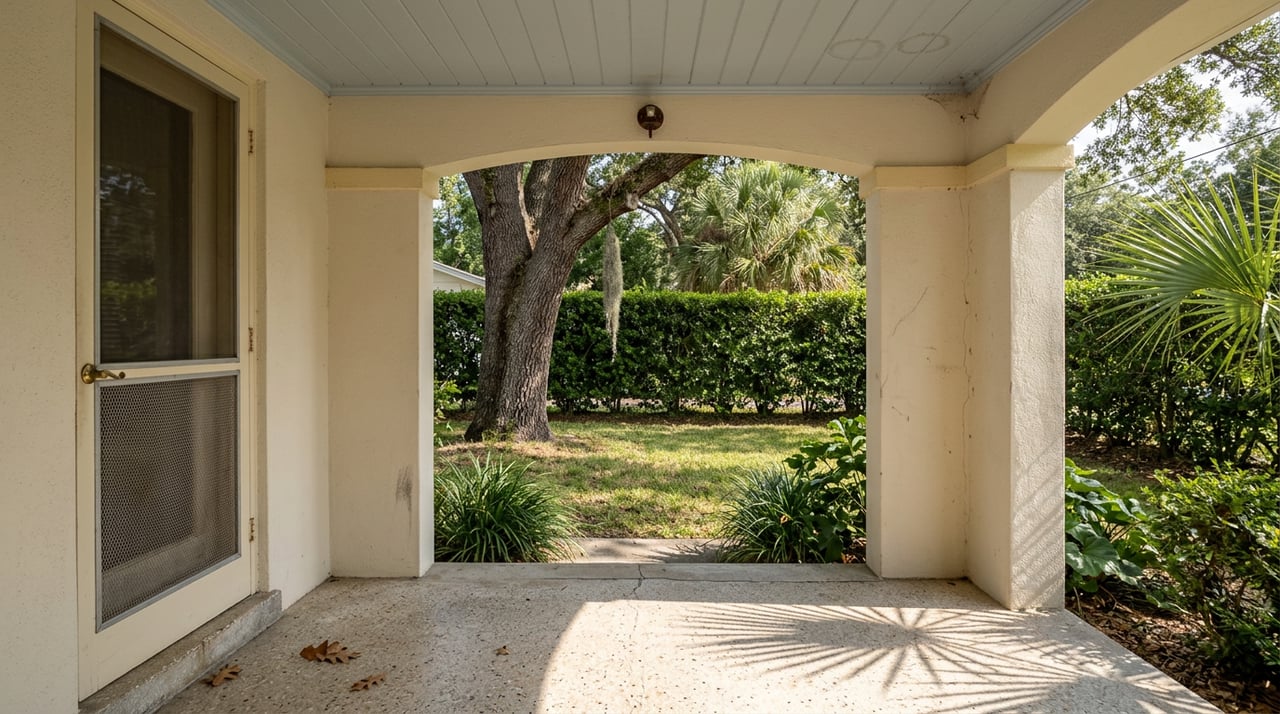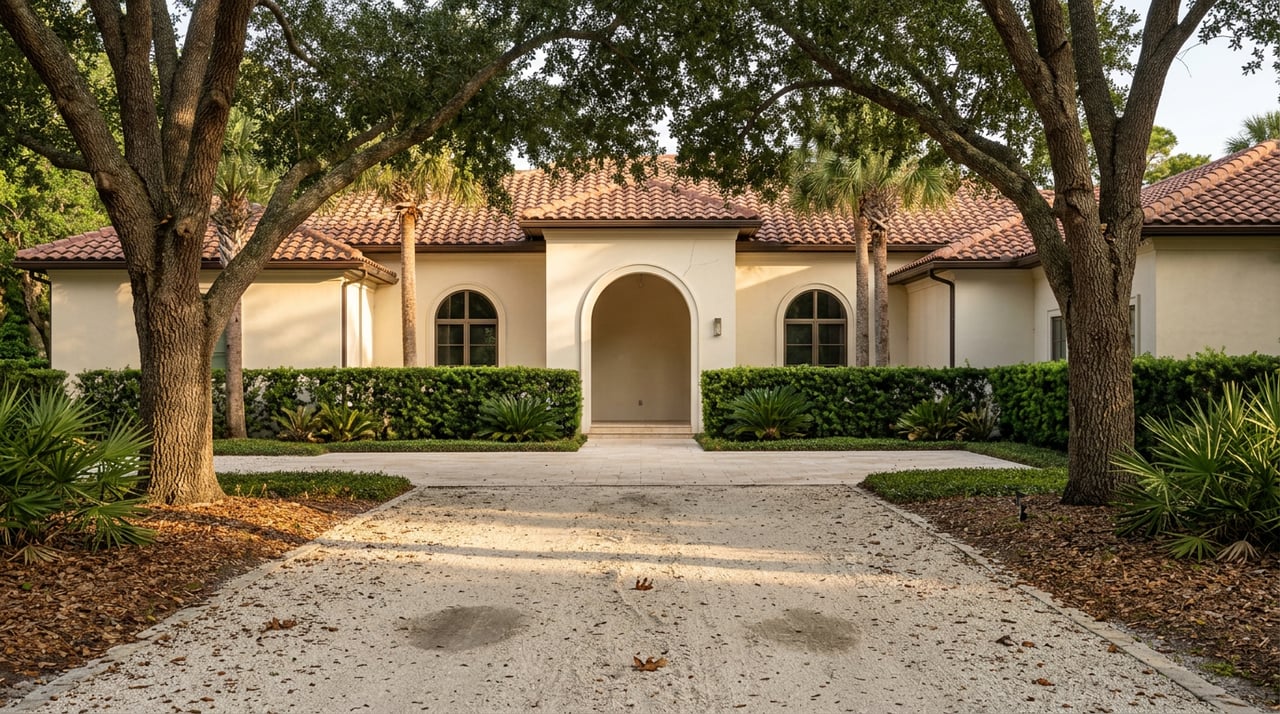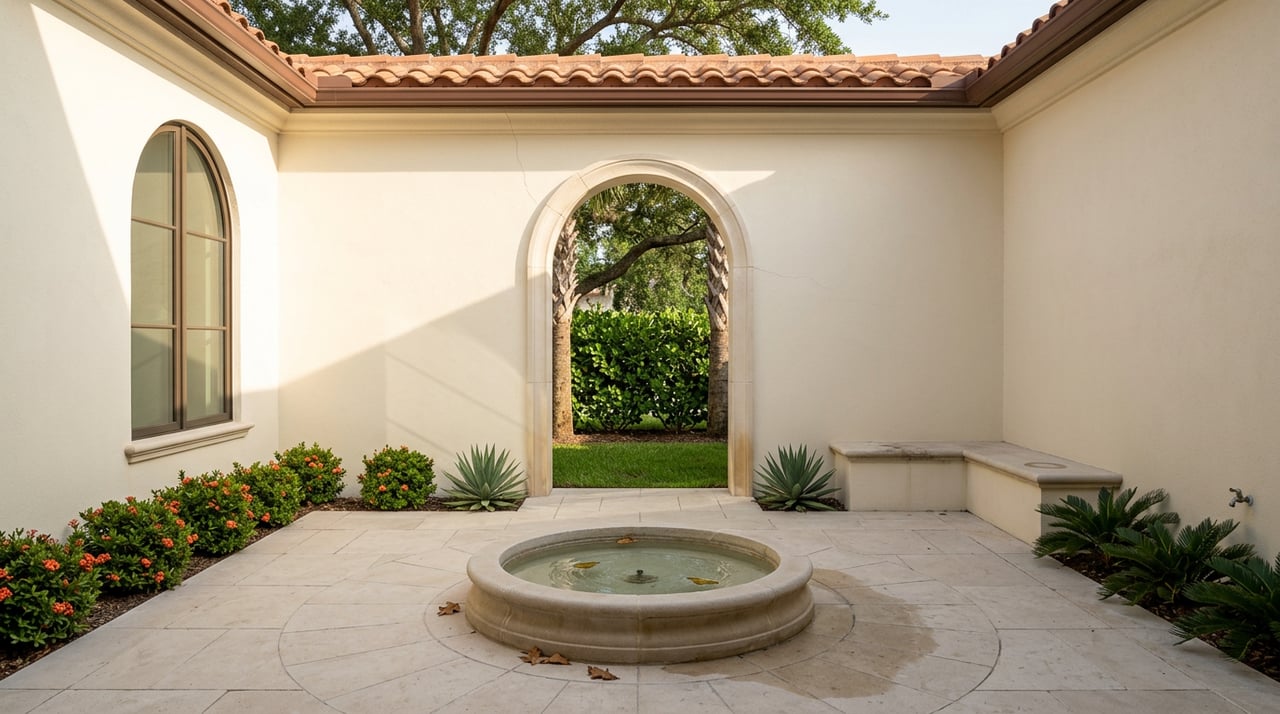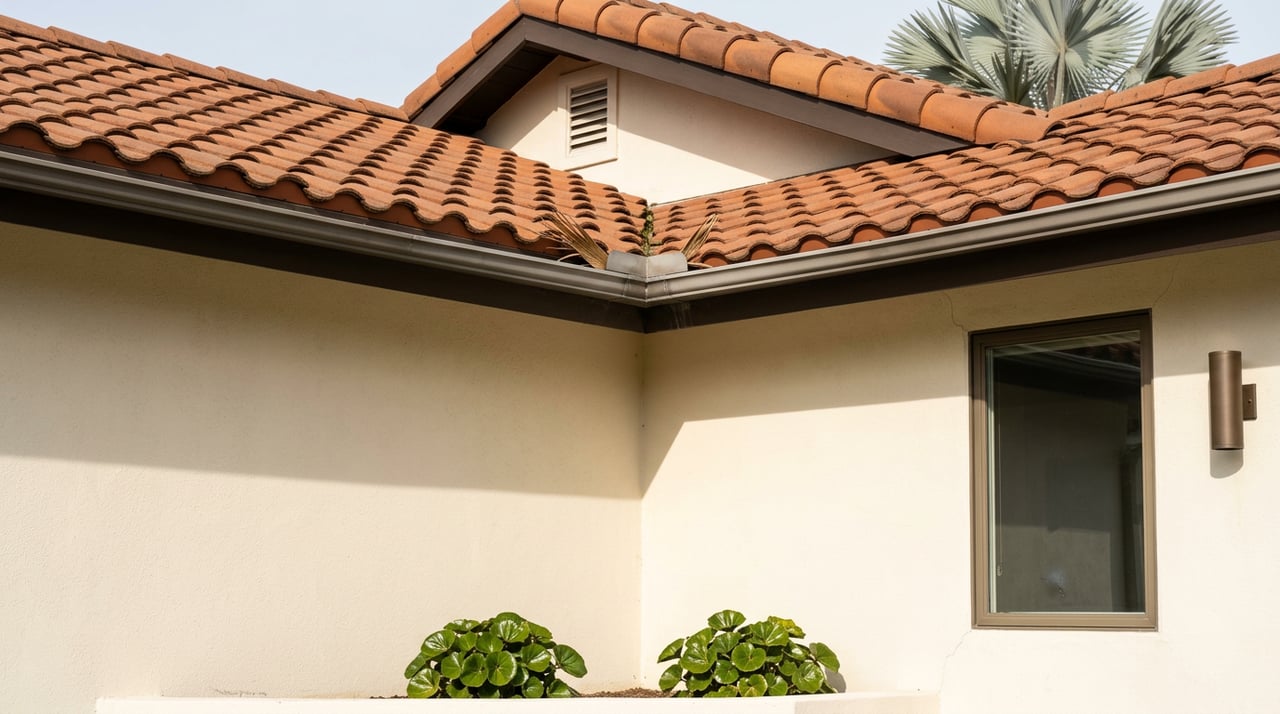
Picture two Fort Myers listings sitting side by side in your saved search. Same $350,000 price. Same three bedrooms, same screened pool, same twenty-minute drive to the beach. One sits under a canopy of live oaks in Edison Park, built back when Fort Myers was still a cattle town figuring out what it wanted to be. The other sits in a newer phase of Gateway, framed within the last decade to the letter of Florida's current building code.
Ask an insurance agent which one costs less to own, and in August 2026 you'll get a different answer than you would have gotten two years ago. Florida rewrote the rules on wind mitigation credits this spring, insurers only started applying those new rules a few weeks ago, and the two homes above are no longer priced the same once you get past the number on the sign.
The gap between them has nothing to do with granite counters or lot size. It comes down to paperwork: whether a home was built under a code that already assumes it deserves a discount, or whether it has to prove that, feature by feature, on a form that got a lot stricter this year.
The Building-Code Line Nobody Mentions At The Showing
Florida's 2001 statewide building code took effect March 1, 2002. Under state law, homes built to that code (or the 1994 South Florida code in Miami-Dade and Broward) qualify automatically for a substantial credit on the windstorm portion of a homeowners policy, often in the high-60-percent range, before an inspector ever sets foot on the property. No inspection is required to unlock it. It's baked into the construction date.
That single line splits Fort Myers's housing stock into two very different starting points. Newer construction in Gateway and along the Treeline corridor was largely built after 2002, so the credit is already there. The city's historic core wasn't. Dean Park's roughly eighty homes were built mostly between 1916 and the mid-1920s, according to the neighborhood's own historic district site. Edison Park's bungalows date to the 1920s through the 1950s. The McGregor Boulevard corridor carries its own mix of early-century estates. None of that housing gets a code-based credit handed to it. Every dollar of wind mitigation discount on those homes has to be earned and documented, one category at a time: roof geometry, roof-deck attachment, secondary water resistance, opening protection.
What Changed On April 1, And What Changes Again This Summer
The form that documents all of this, known as OIR-B1-1802, got its first major rewrite in over a decade, effective April 1, 2026. The Florida Office of Insurance Regulation built the update around a 2024 wind-loss mitigation study, and the new version demands more proof for every feature claimed: photographs, product approval numbers, permit documentation. Insurers only began applying credits under the new form in July, which means as of this writing we're a few weeks into a transition that's still working itself out carrier by carrier.
Reports completed before April 1 remain valid for up to five years if nothing structural has changed. That sounds like a grace period, and for many sellers it is. But it also means a home on the market right now may be carrying a mitigation report written under the old, looser documentation standard, one that doesn't necessarily reflect what the home would earn on today's stricter form. For a Dean Park or Edison Park seller with no automatic code credit to fall back on, that older paperwork is doing more work than it should. Getting a current inspection before listing isn't busywork. It's the only way to know what the discount actually is under today's rules.
Two Fort Myers Housing Stocks, Two Starting Points
| Housing Stock | Typical Construction Era | Baseline Wind Credit | What Still Has To Be Proven | Common 4-Point Flags |
|---|---|---|---|---|
| Historic core (Dean Park, Edison Park, McGregor corridor) | 1912 to 1950s | None automatic, earned feature by feature | Roof geometry, deck attachment, opening protection, secondary water barrier | Federal Pacific or Zinsco panels, polybutylene or galvanized plumbing, aging roof or HVAC |
| Newer construction (Gateway, Treeline corridor) | Post-2002 | Often high-60-percent range off wind premium, code-based and automatic | Confirming code date is on file with the carrier | Rarely triggers a 4-point inspection at all under most carriers' current age thresholds |
The 4-Point Threshold Isn't What It Was Two Years Ago
For a stretch after Hurricane Ian, twenty years old was treated as close to a hard line for requiring a 4-point inspection before a Florida carrier would write or renew a policy, and some coastal Southwest Florida carriers pushed that down to ten or fifteen years. That's loosened again in 2026. Several carriers have moved their threshold back out to twenty-five or thirty years, and some are now accepting actual cash value roof endorsements instead of declining a policy outright over an aging roof.
This cuts against the assumption that Florida insurance access for older homes only gets harder. It hasn't, uniformly. A Dean Park or Edison Park buyer who got turned down in 2024 may have real options today that didn't exist two years ago, precisely because the market corrected. The trade-off is that the proof bar went up at the same time the access bar came down. More carriers will look at your 1920s bungalow. They just want better documentation before they price it.
Why Every Fort Myers Quote Still Carries Ian's Weight
None of this happens in a vacuum. Lee County absorbed more Hurricane Ian insurance claims than any other county in the state, 272,299 of them, more than a third of the statewide total from that single storm, with estimated insured losses statewide reaching roughly $21.4 billion, according to state Office of Insurance Regulation data reported by WGCU. That claims history didn't reset when the storm cleared. It's still priced into every quote a Fort Myers buyer sees in 2026, old home or new.
At the same time, the market that quote comes from has changed shape. Citizens Property Insurance Corporation, the state's insurer of last resort, started 2026 with about 395,000 policies statewide, down from roughly 936,000 a year earlier, according to Florida Realtors. Hundreds of thousands of those policies moved to private carriers through the state's depopulation program. For a Fort Myers buyer, that means the seller's current carrier may not be the one available to you at close. The financial strength and claims track record among those private takeout carriers varies enough that it's worth confirming before you count on a specific number.
Before You Write The Offer
- Ask for the wind mitigation report's inspection date, not just its existence. Confirm whether it predates or postdates April 1, 2026.
- If the home is older than roughly fifteen to twenty years, ask which 4-point threshold your target carrier is actually using today, not what it was using two years ago.
- For pre-1990s electrical panels, request permit or replacement history before assuming a Federal Pacific or Zinsco panel is a dealbreaker rather than a fixable line item.
- Get an actual carrier quote, not a rough estimate, before your inspection period closes. The same home can price very differently across carriers right now.
- For historic-district homes, ask your inspector to spell out which specific mitigation features are already documented, so you know exactly which upgrade would move the discount fastest.
FAQ
My Dean Park or Edison Park home already has a wind mitigation report. Do I need a new one before I sell? Not necessarily. Reports completed before April 1, 2026 remain valid for up to five years if nothing structural has changed. But if you've added hurricane straps, a new roof, or impact-rated openings since that report was written, a fresh inspection under the new form could raise the credit a buyer's lender sees, and that number tends to come up during the closing conversation either way.
Can an older Fort Myers home still get competitive insurance in 2026? Often, yes. Carrier appetite for older homes has loosened somewhat this year, and documenting the four core wind mitigation categories, roof covering, roof-deck attachment, secondary water resistance, and opening protection, can close much of the gap that automatic code credit hands newer construction. It takes more paperwork. It doesn't take a newer house.
None of this shows up on the listing sheet, which is exactly the point. Two homes at the same price in Fort Myers can carry two different real costs of ownership in 2026, and the only way to know which one you're actually buying is to run the insurance numbers before you write the offer, not after.
If you're comparing a historic-district home against new construction, or relocating from out of state and trying to make sense of what a Fort Myers quote should look like, Leonor Enguita and the Heritage Home Team can walk you through both sides of that math in English or Spanish. Book a free relocation consultation before you fall in love with a listing that doesn't tell you the whole story.