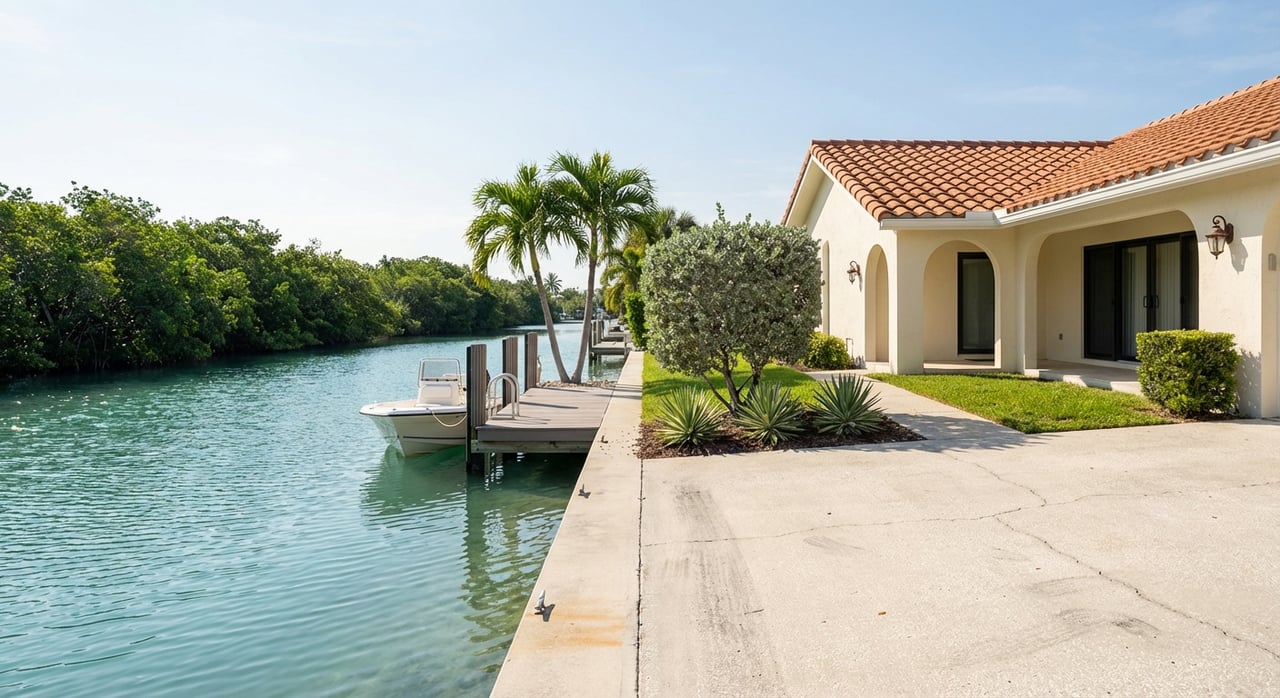
Is a postcard‑perfect water view worth the added cost, or will an inland home give you more peace of mind and value in Naples? If you are relocating, buying a second home, or investing in Collier County, this choice shapes your budget, insurance, maintenance, and rental potential. In this guide, you will get clear, local context on prices, risk, rules, and a simple checklist to make the right call for your goals. Let’s dive in.
Naples market at a glance
Naples shifted from a very hot pandemic market toward a more balanced environment in 2024 and 2025 as inventory rose and pricing adjusted. You can review monthly medians in the Naples Area Board of REALTORS monthly reports, which are the go‑to source for current numbers. NABOR’s market statistics show typical medians in the mid‑$500k to mid‑$600k range during 2024 and 2025, depending on the month.
Waterfront neighborhoods sit well above citywide medians. Prime areas like Aqualane Shores, Old Naples, Park Shore, and Port Royal are consistently in luxury territory. For example, Aqualane Shores neighborhood data illustrates multi‑million‑dollar listing and sale activity. By contrast, many inland communities in North and East Naples trend closer to overall county medians.
What the premium looks like
- Direct beachfront and exclusive bayfront homes often command the highest premiums.
- Gulf‑access canal homes usually price above inland comparables but below beachfront. Premiums vary by dock size, canal depth, and speed to the Gulf.
- Inland homes offer the most price flexibility and selection, which helps if you want newer construction or a larger home at a given budget.
Insurance and financing differences
Waterfront living brings distinct insurance and lending rules. Plan for them early so there are no surprises during escrow.
Flood zones and Risk Rating 2.0
Flood insurance costs under FEMA’s Risk Rating 2.0 are property‑specific. Distance to water, elevation, and building features drive pricing. Coastal and low‑elevation homes often see higher NFIP premiums than inland homes. Review the factors and ask your insurance pro to quote the exact address using elevation data. See FEMA’s overview of Risk Rating 2.0 on the FloodSmart agents page.
Practical tip: Request a flood‑zone determination and, if applicable, an Elevation Certificate as soon as you get serious about a property.
Windstorm and homeowners insurance
Florida’s insurance market has seen changes, with carrier participation improving and some rate relief appearing in late 2025. Even so, coastal properties may face higher windstorm deductibles, roof‑age scrutiny, and stricter underwriting than inland homes. For statewide context and market updates, review Citizens Property Insurance press releases.
Lender flood requirements
If you plan to finance, know that federally regulated lenders must require flood insurance for homes located in Special Flood Hazard Areas. Confirm requirements early with your lender to avoid delays. Fannie Mae summarizes the standards in its selling guide on flood insurance.
Insurance action checklist
- Get a flood‑zone determination and Elevation Certificate, if applicable, before inspection periods expire.
- Compare NFIP and private flood quotes for the property address, and ask about mitigation credits such as elevation or flood vents. Refer to FEMA’s FloodSmart agents guidance for what affects pricing.
- Ask your agent about wind mitigation credits, roof age, secondary water resistance, and opening protection that may reduce premiums.
- For higher‑value waterfront, discuss options like excess flood or umbrella liability coverage with your insurance pro.
Maintenance, permitting, and long‑term costs
Waterfront ownership includes unique structures and systems that require care. Budgeting for these items upfront leads to smoother ownership.
Seawalls, docks, and lifts
If the home includes a seawall, dock, or boat lift, plan for periodic maintenance or replacement over time. Contractor estimates vary widely by materials, access, and permitting. Industry sources show a broad range that can run from the low hundreds to over a thousand dollars per linear foot for significant seawall work. Use local quotes for accuracy and see a cost overview example from ShoreProtect. Always verify the most recent work and permits before closing.
Salt air and exterior wear
Coastal environments accelerate wear on metal fasteners, railings, and outdoor fixtures. Wood elements and exterior finishes often need more frequent sealing or paint. Pools, HVAC, and landscaping can also require extra attention after storm season. These recurring costs typically run higher than for similar inland homes, so factor them into your annual budget.
Permits and coastal rules
Work on or near the water is often regulated by multiple agencies. Collier County enforces floodplain and building rules for structures in flood zones. Review local guidance in Collier’s resource on building within the floodplain. Depending on location and scope, state environmental resource permits may also apply. Confirm all permit statuses and shoreline ownership responsibilities during due diligence.
Due diligence to do now
- Request the seller’s permit history for any seawall, dock, or lift work and ask for recent inspection reports.
- Verify who maintains shoreline structures. In some communities an HOA manages them, while in others it is a private owner responsibility.
- Ask about any recent storm repairs, special assessments, or planned capital projects related to shoreline or drainage.
- Build a maintenance reserve for exterior paint, metal corrosion treatment, and lift or dock servicing.
Rental potential and rules
If income is part of your plan, model both revenue and costs. Naples is a year‑round destination with a strong winter season. The local tourism board shares monthly visitation and ADR indicators that can inform projections. Check the Paradise Coast CVB’s Data, Trends and Insights before you set expectations.
Registration and taxes
Short‑term rentals in unincorporated Collier County must register under Ordinance 2021‑45 and list a 24/7 responsible party. Properties inside the City of Naples are exempt from the county’s registration rule, and city rules can differ. Read the county requirements on Collier’s STR registration page.
Rentals under six months typically trigger Florida sales tax and Collier County tourist development tax. Some platforms remit certain taxes, but you as the owner are responsible for registration and compliance. Confirm HOA bylaws, minimum stay rules, and whether docks or lifts may be used by guests.
Pro forma tips for investors
- Waterfront homes can earn higher ADR thanks to views, private docks, and gulf access. Inland homes can still perform well if they offer new finishes, community amenities, or proximity to attractions.
- Separate top‑line revenue from recurring extras. Line up insurance, flood, and wind costs, plus seawall or dock service reserves, management fees, utilities, and potential storm‑season vacancies.
- Build a conservative high‑season and low‑season occupancy model using local comps and the CVB’s trend data.
Lifestyle tradeoffs to consider
Waterfront lifestyle
- What you gain: daily water views, boating or paddle access from home, premium resale appeal in coveted neighborhoods.
- What you give up: higher insurance and maintenance, more permitting complexity, and potentially stricter HOA and construction rules.
Inland lifestyle
- What you gain: more home for the money, often newer construction at a given budget, typically lower insurance costs, and simpler maintenance.
- What you give up: direct water access and the on‑the‑water vibe many buyers seek for seasonal living.
10‑minute decision checklist
Use this quick framework to test waterfront vs inland against your goals.
- Purpose and horizon. Is this a primary home, seasonal retreat, or STR investment? Your priority might be lifestyle, resilience, or yield. Consult the CVB’s trend pages for seasonality context when planning income.
- Budget reality. Compare neighborhood medians and examples from NABOR’s monthly reports. Add expected extras such as flood and wind insurance, seawall or dock upkeep, and HOA fees.
- Flood and elevation. Request an Elevation Certificate and a flood‑zone determination early. Get address‑specific NFIP and private flood quotes using FEMA’s FloodSmart guidance.
- Permits and shoreline ownership. Verify whether the seawall and dock are privately owned or HOA‑maintained, and review any recent permits. Start with Collier’s floodplain and building resources.
- Financing requirements. If the home is in a Special Flood Hazard Area, expect lender flood insurance requirements. Review Fannie Mae’s flood standards.
- Insurance strategy. Ask an agent about wind mitigation credits, roof age underwriting, and optional excess flood or umbrella coverage. For market context, see Citizens’ updates.
- STR viability. Confirm city vs county rules. County properties need registration, while City of Naples properties are exempt from the county ordinance. Read Collier’s STR registration guide.
- Maintenance plan. Obtain contractor quotes for any seawall, dock, or lift needs and budget for exterior upkeep. Use ranges like those shown by ShoreProtect as a starting point, then verify locally.
Which path fits you best
If you want boat‑in‑the‑backyard living and plan to hold long term, a well‑maintained waterfront home can be a treasured choice if you budget for insurance and upkeep. If you value newer finishes, lower carrying costs, and flexibility at a given price, an inland home may deliver the lifestyle you want with less complexity.
Either way, the right partner makes it smoother. Our team guides you through flood and insurance quotes, permit checks, HOA rules, and video walkthroughs if you are out of town. Hablamos español. Ready to compare real options in Naples and Collier County? Connect with The Heritage Home Team to book a free relocation consultation.
FAQs
What should I budget for seawall repairs in Naples?
- Costs vary widely by materials and site conditions. Sources show a broad range from the low hundreds to over a thousand dollars per linear foot for major seawall work, so get local contractor quotes for the exact property and scope.
Do lenders require flood insurance for Naples canal homes?
- If a property is in a Special Flood Hazard Area, most regulated lenders will require flood insurance. Confirm your zone and review lender standards like Fannie Mae’s flood insurance requirements early in the process.
Are short‑term rentals allowed in Collier County and Naples?
- Unincorporated Collier County requires STR registration and a 24/7 responsible party, while properties inside the City of Naples are exempt from the county ordinance. Always confirm jurisdiction, HOA rules, and tax obligations before listing.
Will inland Naples homes have lower insurance than waterfront?
- Often yes, because inland homes tend to have lower flood risk and less wind exposure, but premiums are address‑specific. Get quotes for both flood and homeowners insurance, and ask about wind mitigation credits.
How do I compare waterfront vs inland home values right now?
- Start with monthly medians and neighborhood breakouts in NABOR’s market statistics, then review recent neighborhood examples. Combine that with insurance quotes and maintenance estimates to see your true monthly cost.